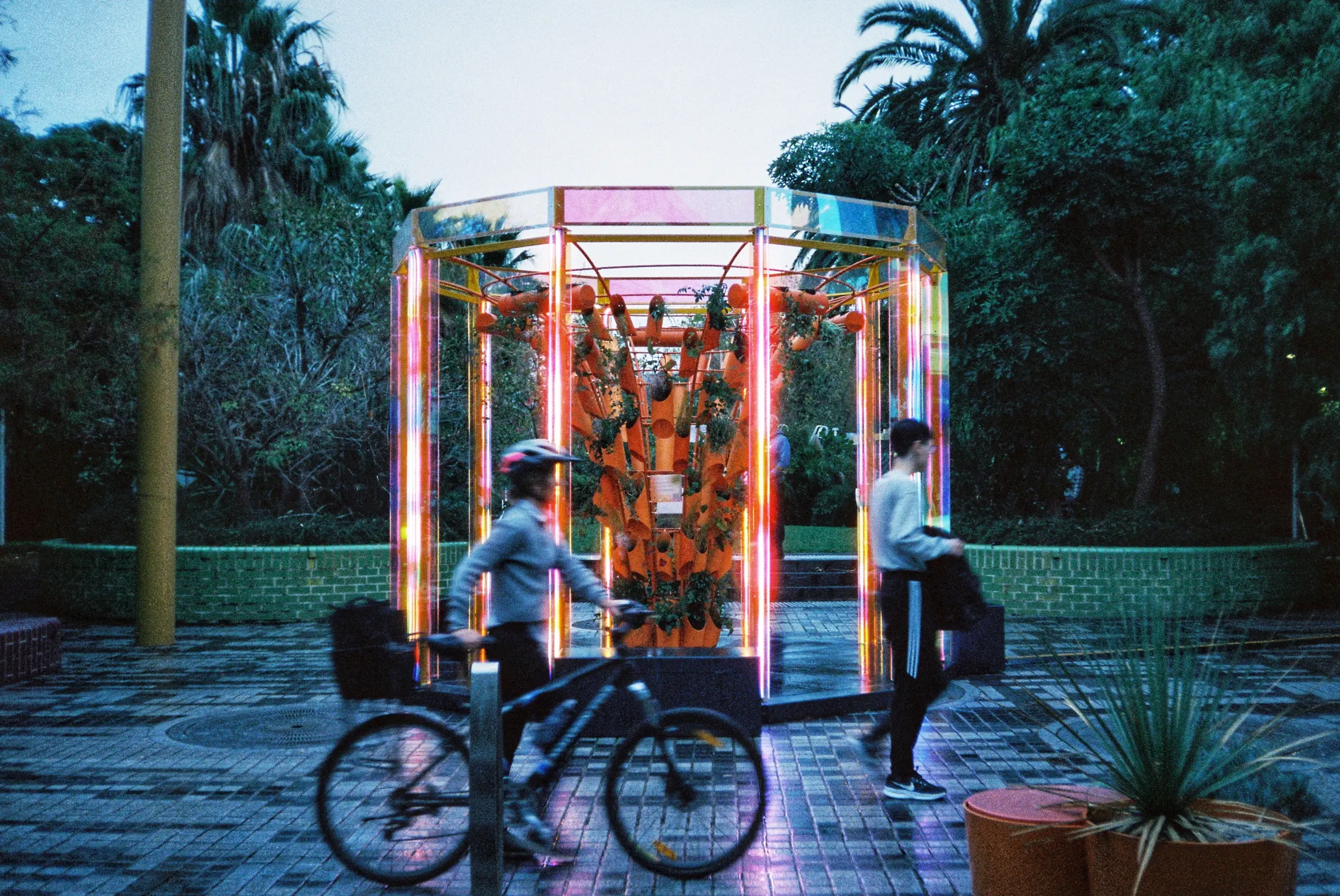
BioRhythm
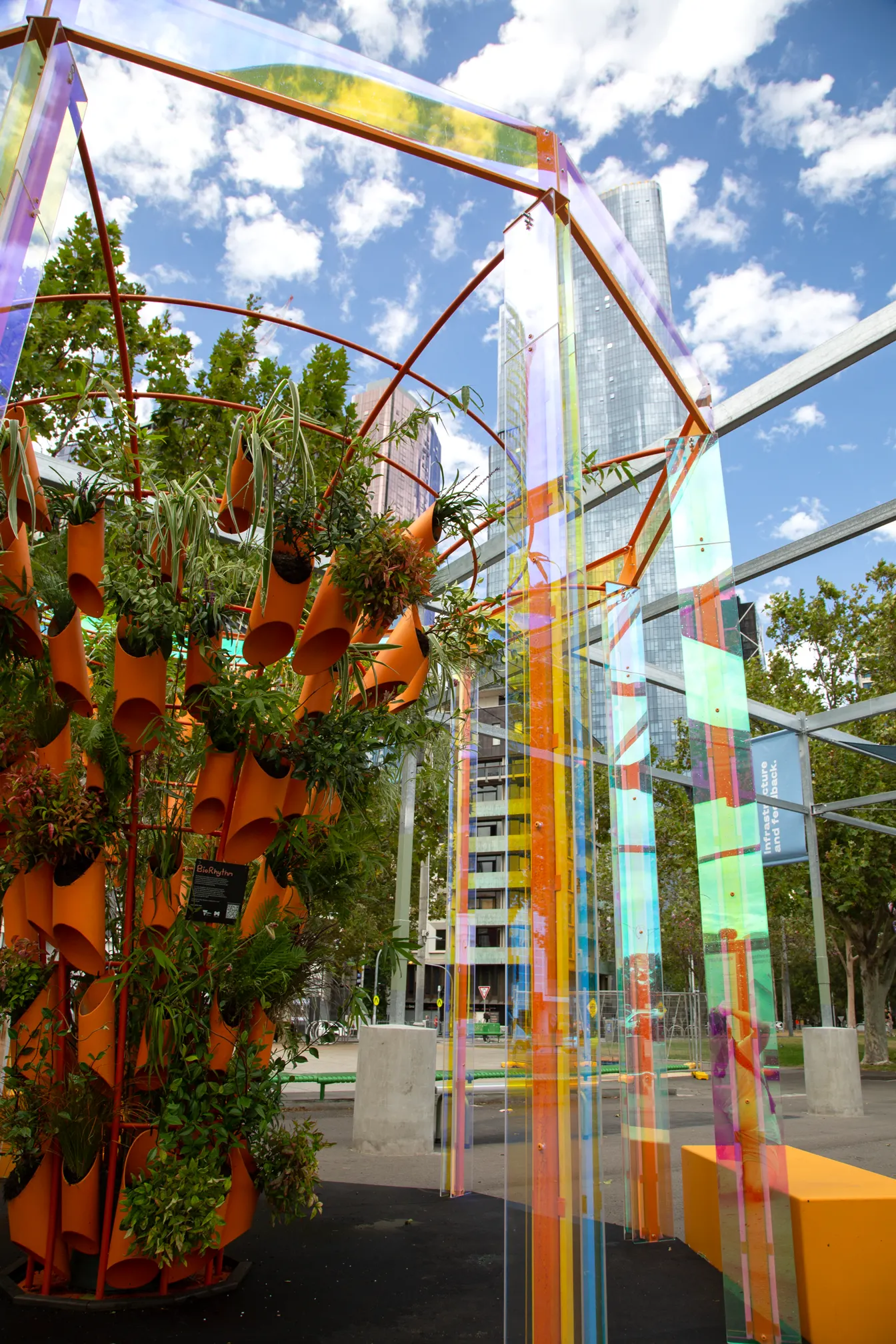
BioRhythm is an adaptable sculpture that comes alive by synthesising the biofeedback of plants and urban surroundings, transforming the data into living soundscapes and explosions of colour.
- Work
- Biophilic, interactive public light and sound sculpture
- Material
- Steel funnel structure, dichroic acrylic, 10 LED light columns, environmental sensors, 80+ living plants
- By
- Buko Studio & Public Street, led by Chris Nichols, Amir Mahdavian & Rachel Iampolski
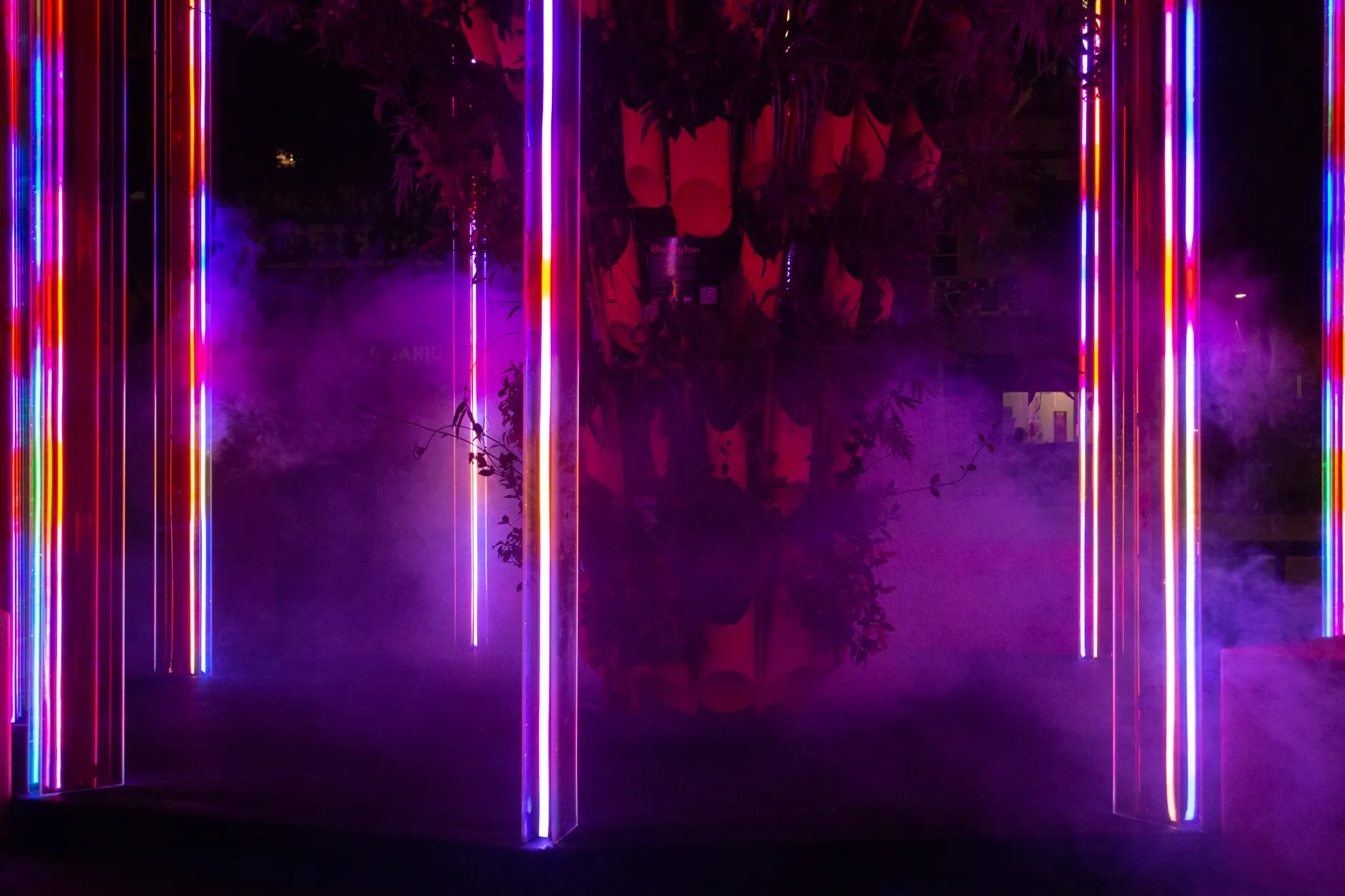
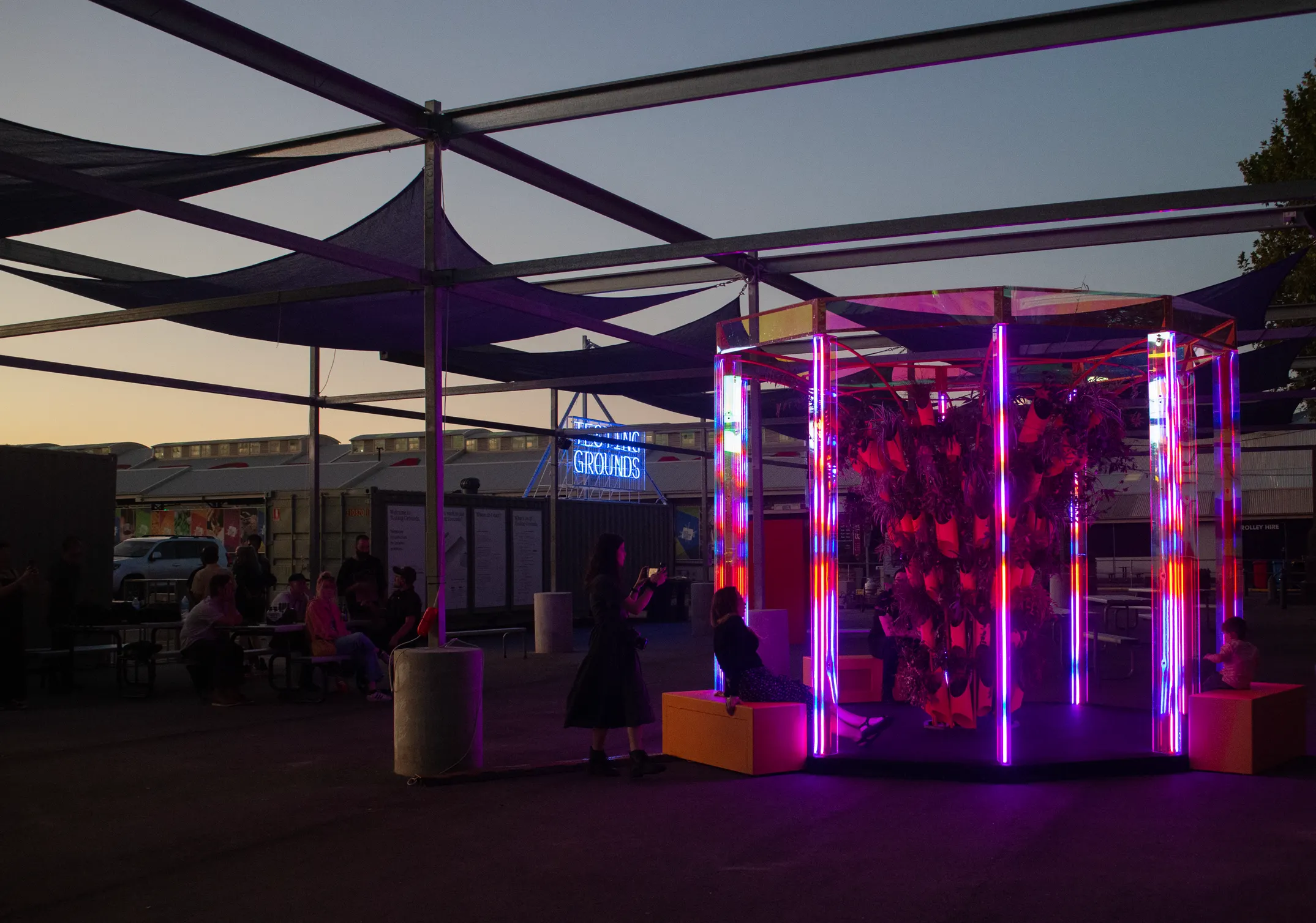
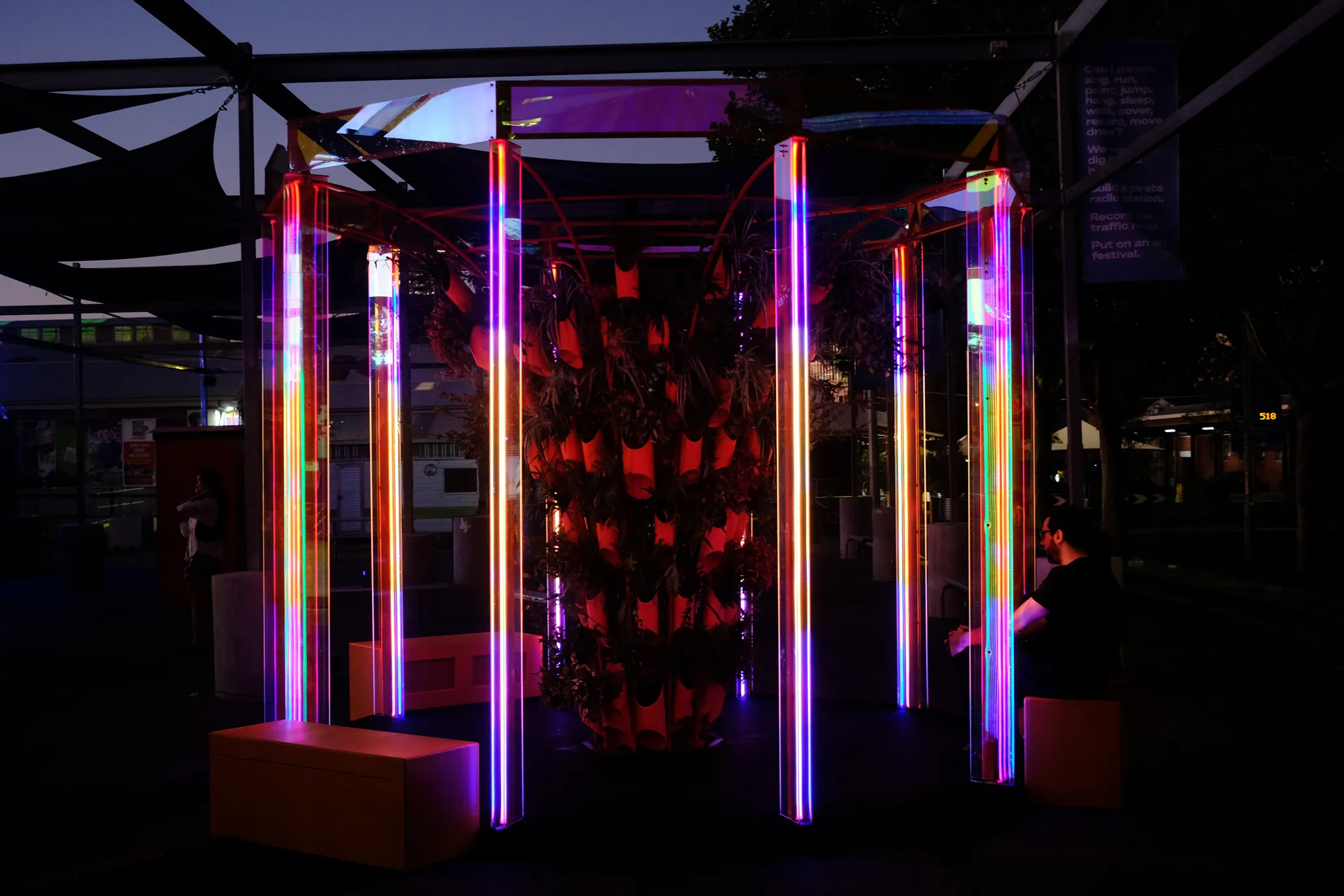
BioRhythm is a biophilic, multi-sensory public art installation: a living light sculpture that transforms biofeedback from endemic plants and the surrounding urban environment into soothing explosions of colour and a constantly evolving light and sound show.
By blurring the lines between biology, technology and place, BioRhythm fosters learning and connection while igniting curiosity and discovery within the public realm. As people move through the installation they are invited to explore nature's intrinsic role in urban environments, and to deepen their sense of place through QR-linked educational material about the plants.
- 01
Cocoon
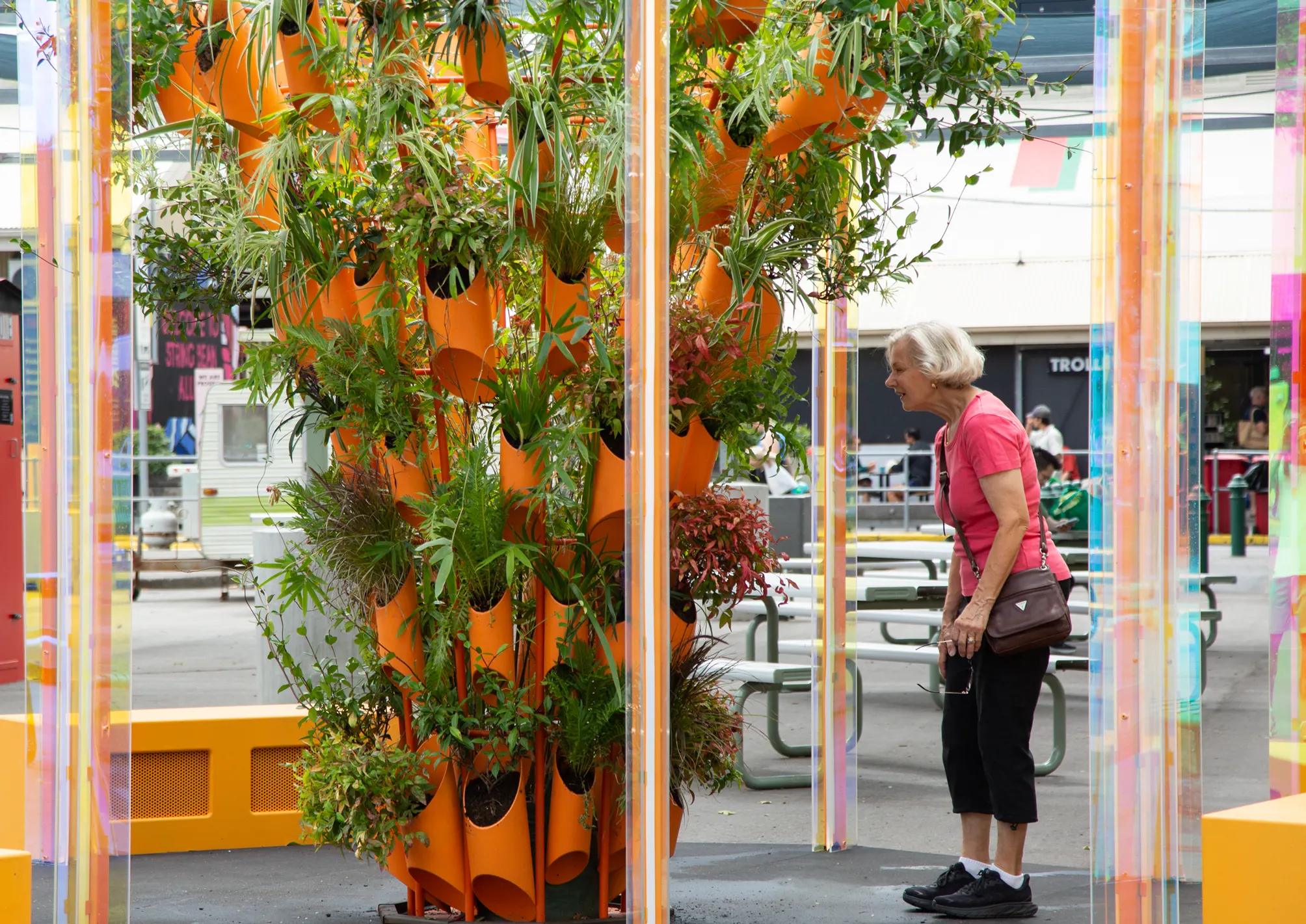
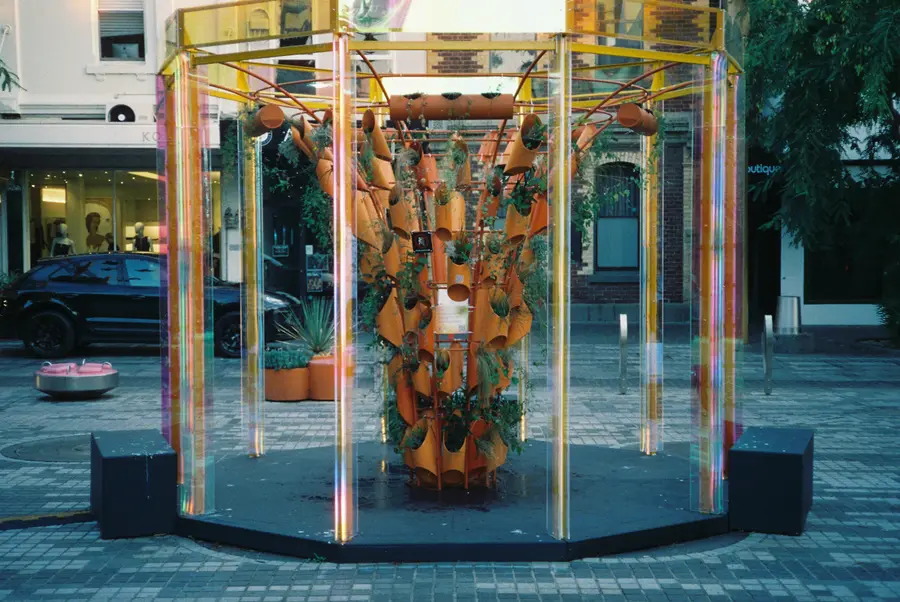
An immersive and intimate cocoon of plants that surrounds you in sound and light.
- 02
Real time
A light and audio show generated live from sensor data from the plants and the environment around them — adaptable for live music performance.
- 03
Living
A funnel structure holding more than 80 plants, with species chosen for each site.
- 04
Public
A durable, self-supporting structure that invites people to gather, sit and rest within it.
Plant biofeedback → light & sound
How it
works
Our work explores how technology can become a canvas for the natural world, translating an invisible language and telling the stories plants have always been telling.
- 01 — Sense
Listening to plants
Around 20 of the sculpture's 80+ plants are wired with sensors that track moisture changes in their soil. Further sensors read the carbon dioxide the plants give off, along with temperature and light levels in the street around them, all in real time.
- 02 — Translate
Data to instruction
Software built in TouchDesigner, running with Arduino and Raspberry Pi hardware, turns the live stream of plant and environmental data into instructions for light and sound.
- 03 — Light
Ten columns of colour
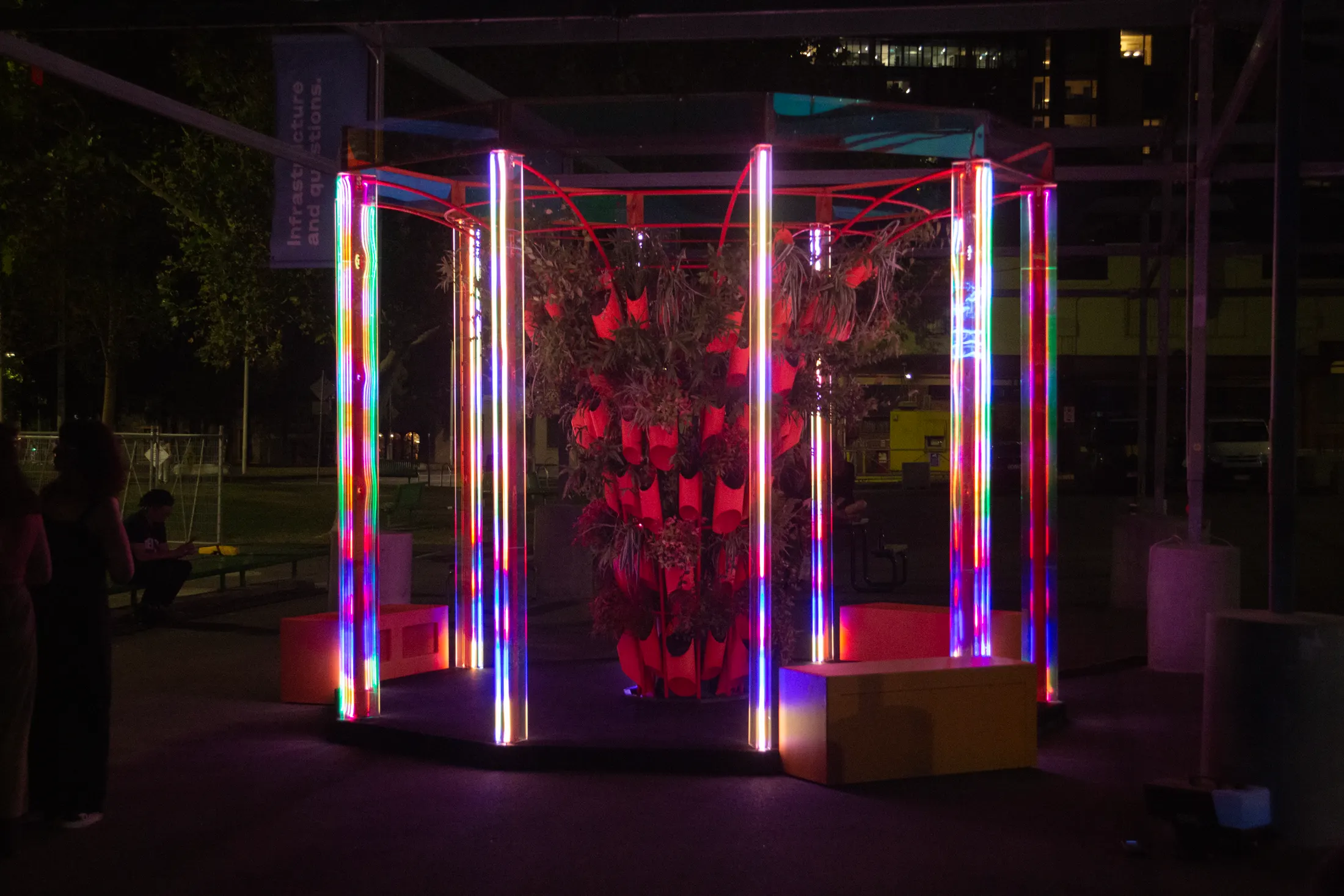
Ten LED light columns set in dichroic acrylic shift colour and movement as the readings change, so the sculpture's glow is a live portrait of the plants and the place.
- 04 — Sound
An evolving score
The soundscape draws on two artists' scores, by Myllo and Berkay Mete. Different readings bring in different layers, so the audio is continuously evolving and never quite repeats.
- 05 — Time
At the pace of plants
Changes are deliberately slow and subtle, like watching a plant grow. The sculpture switches on in the early morning and off at night, out of respect for local residents.
Why plants? Because the land remembers what grew here before the city did.
We plant each BioRhythm for its site. At Grattan Gardens we worked with Rewilding Stonnington to select species endemic to the area before colonisation. That made the sculpture both a small new habitat and a way of telling the pre-colonial story of the land it stands on.
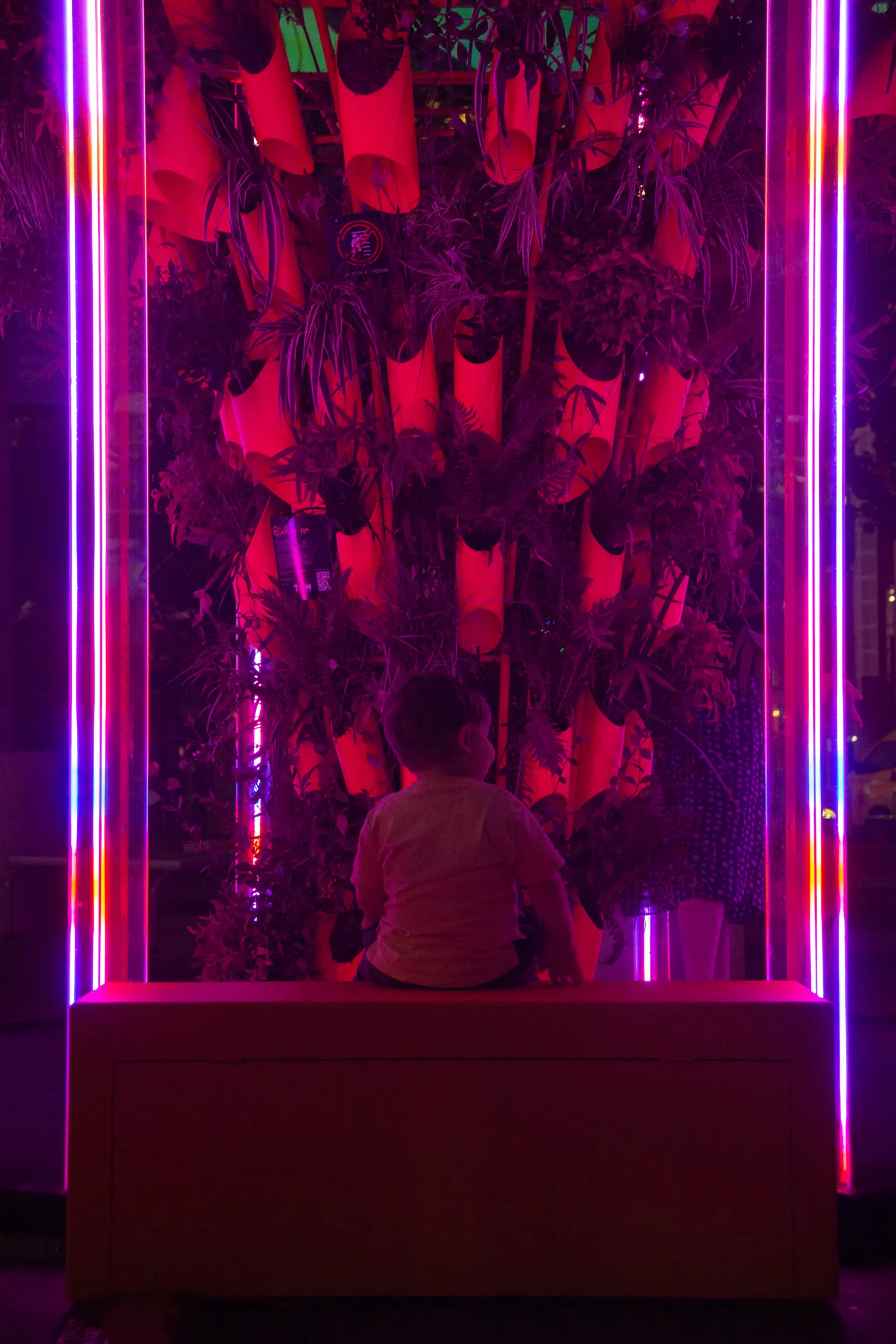
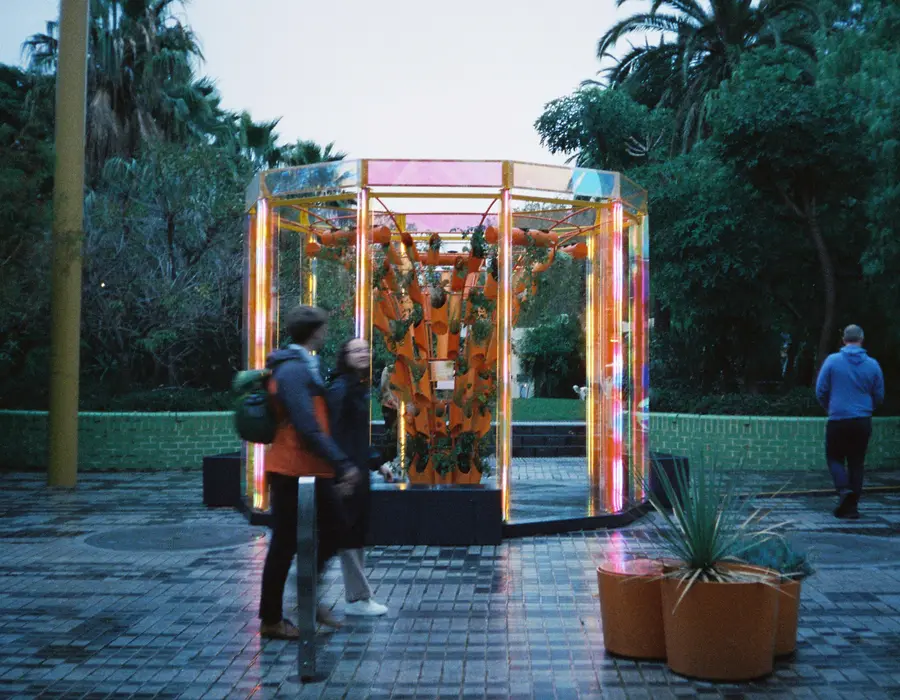
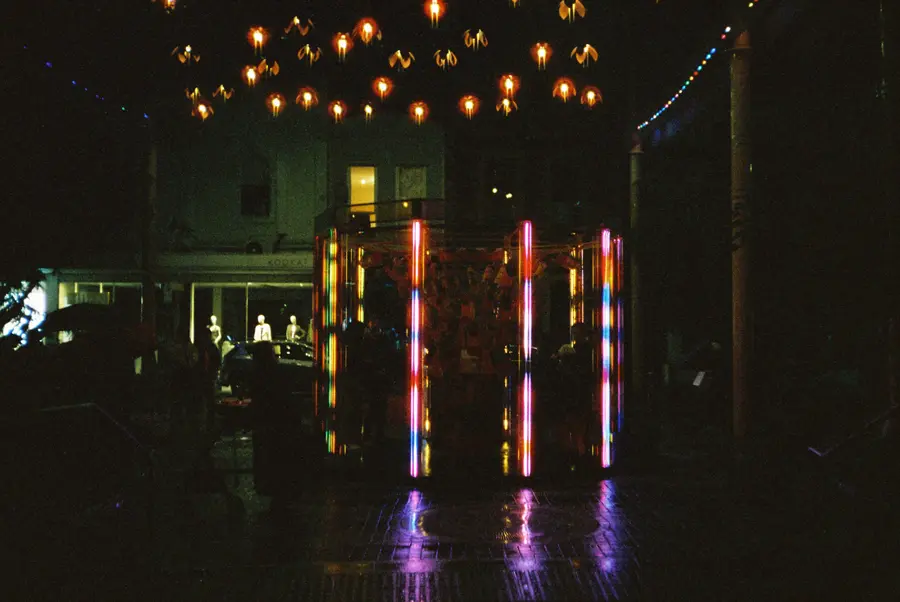
We watched visitors understand it intuitively. Many sensed it was reading the plants before reading a word about it. Its enclosed, cocoon-like form created a pocket of calm within the public realm. People often stayed for up to an hour, and it became a meeting point, a resting place and a beacon after dark.
Edition 01
Testing
Grounds
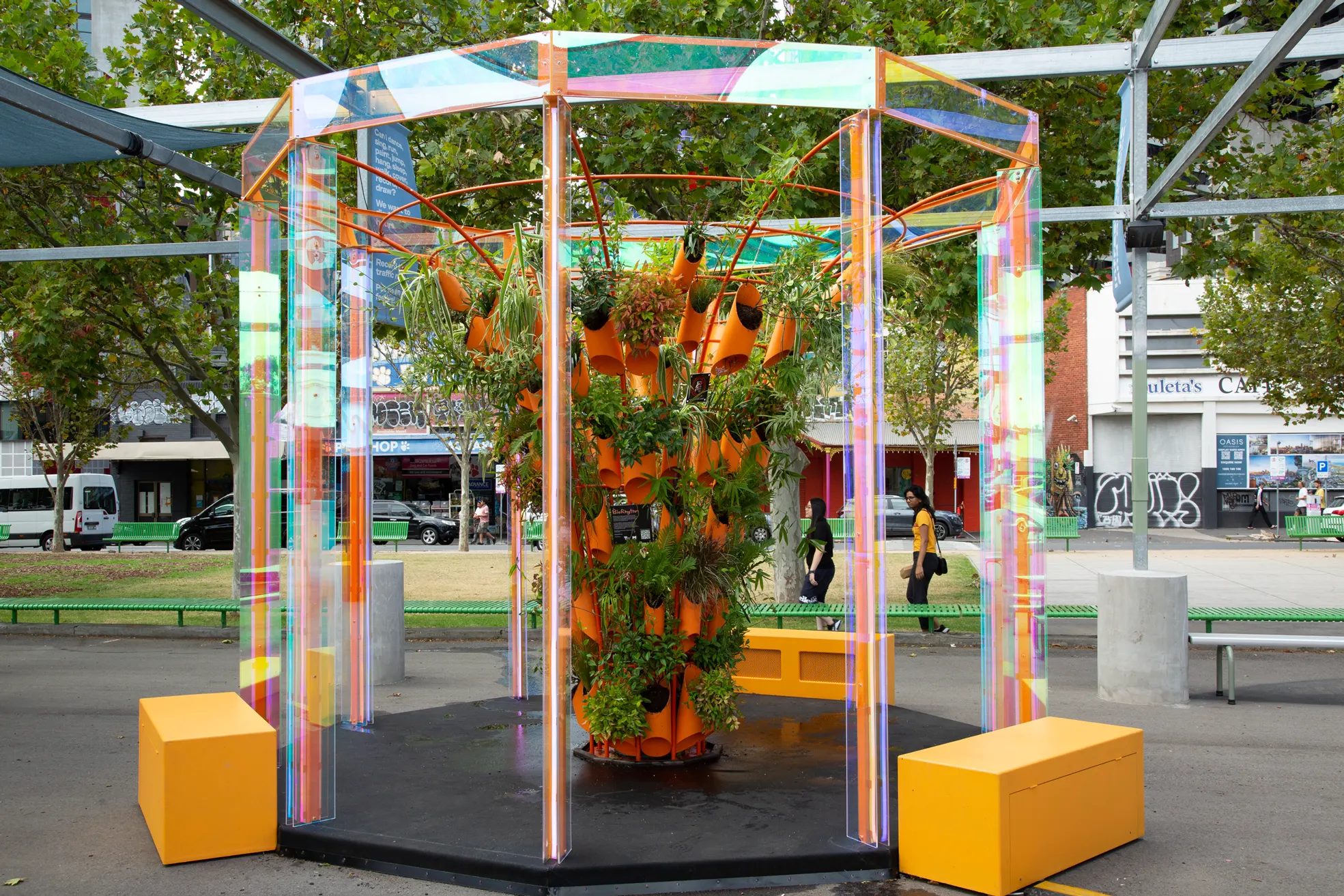
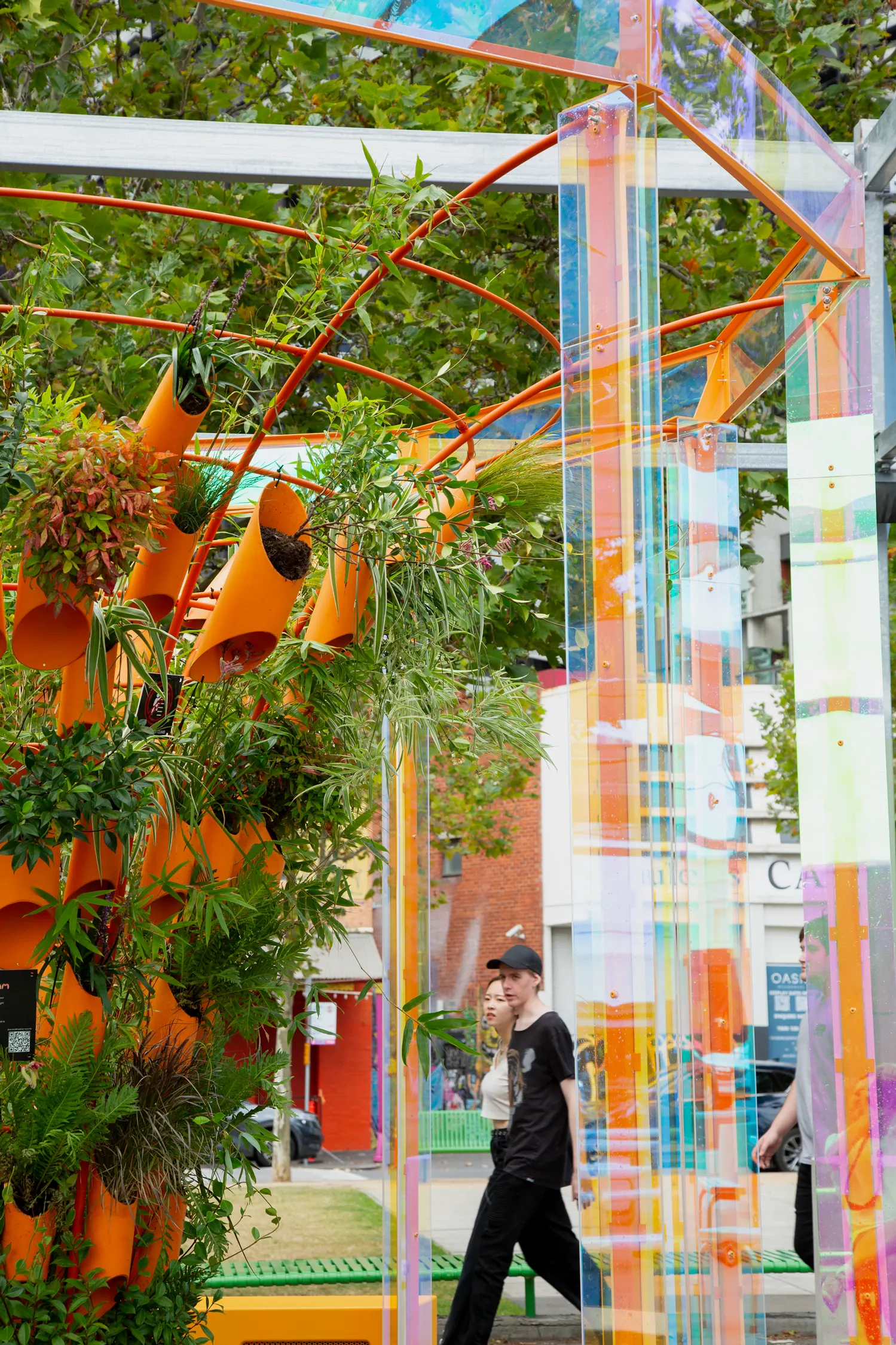
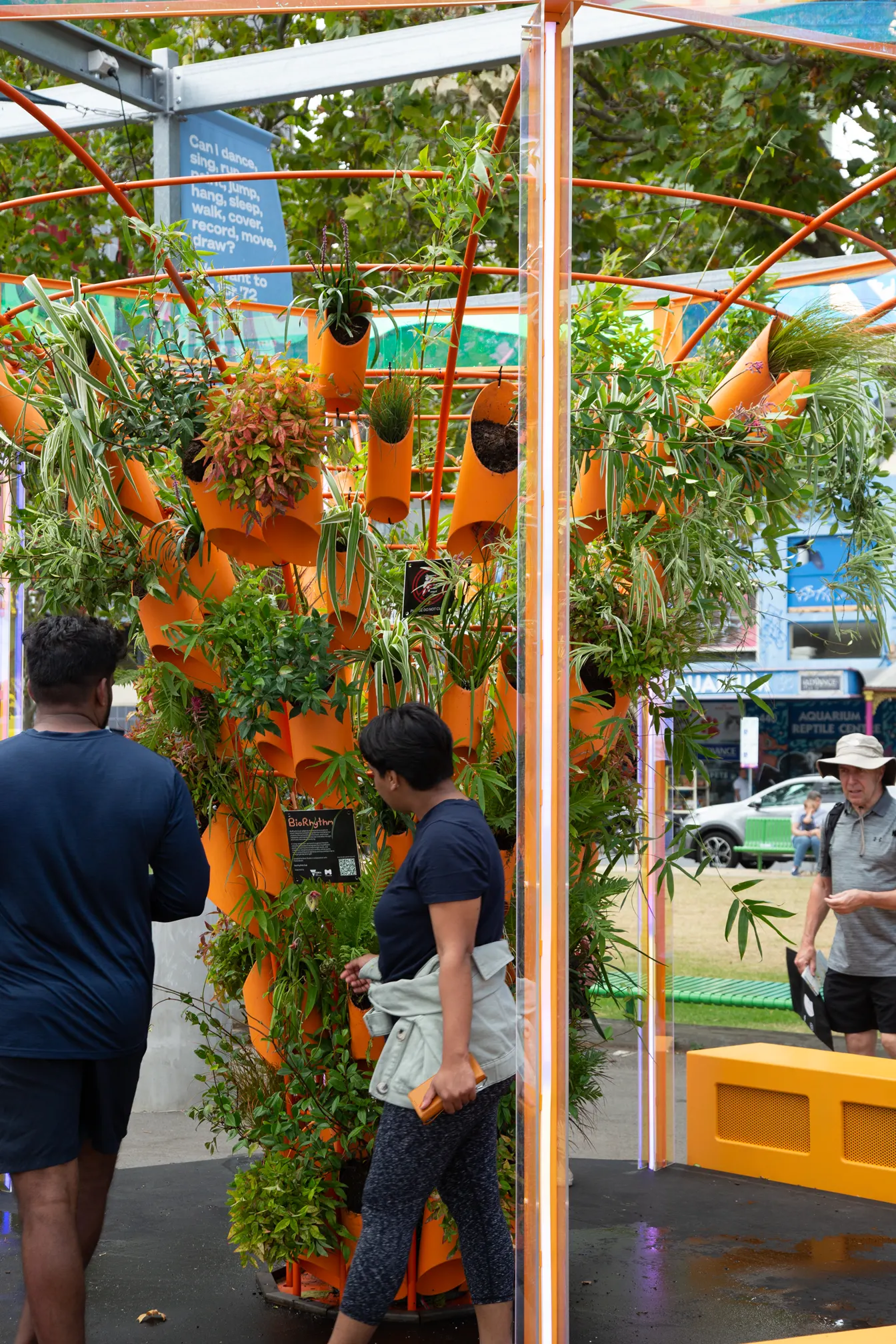
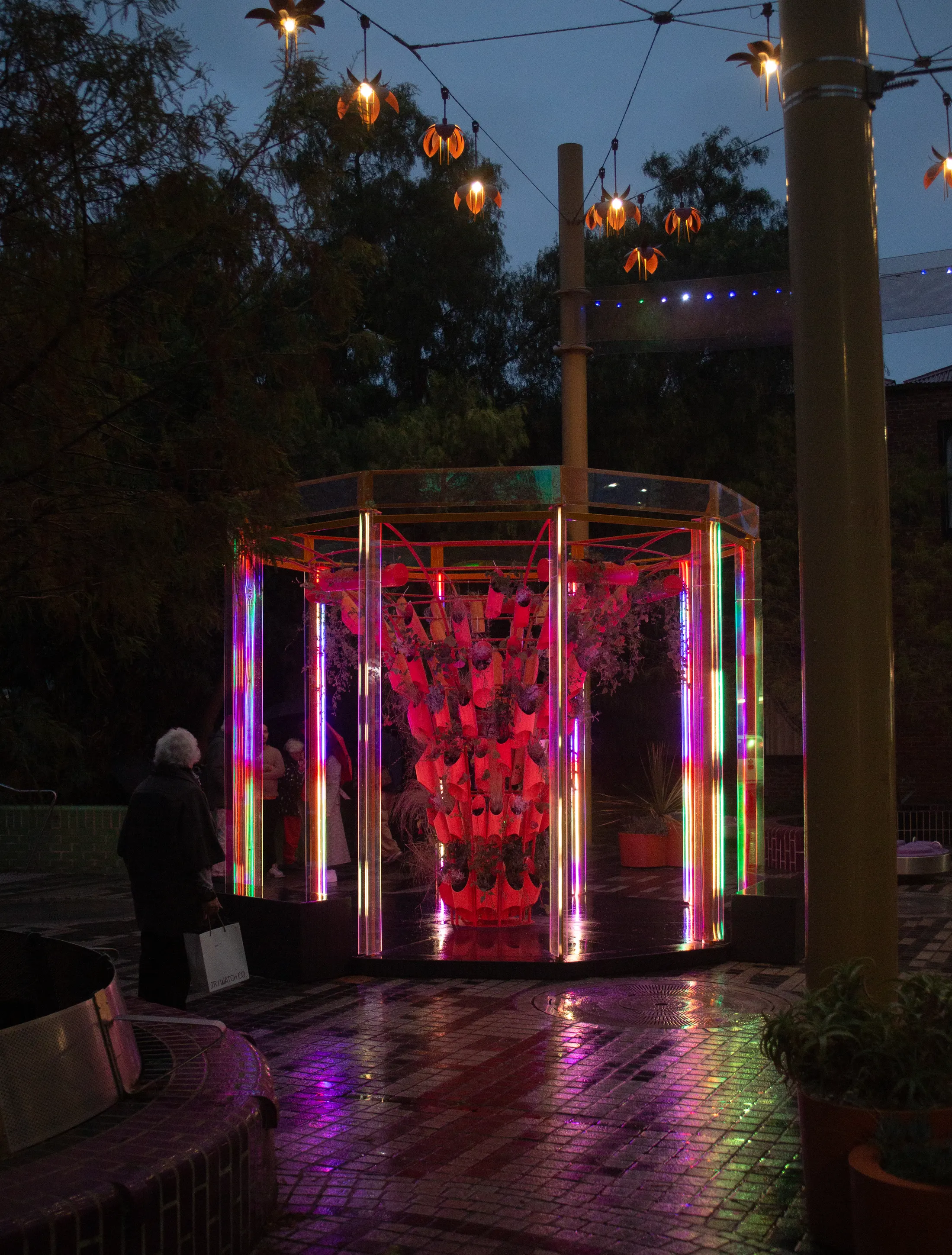
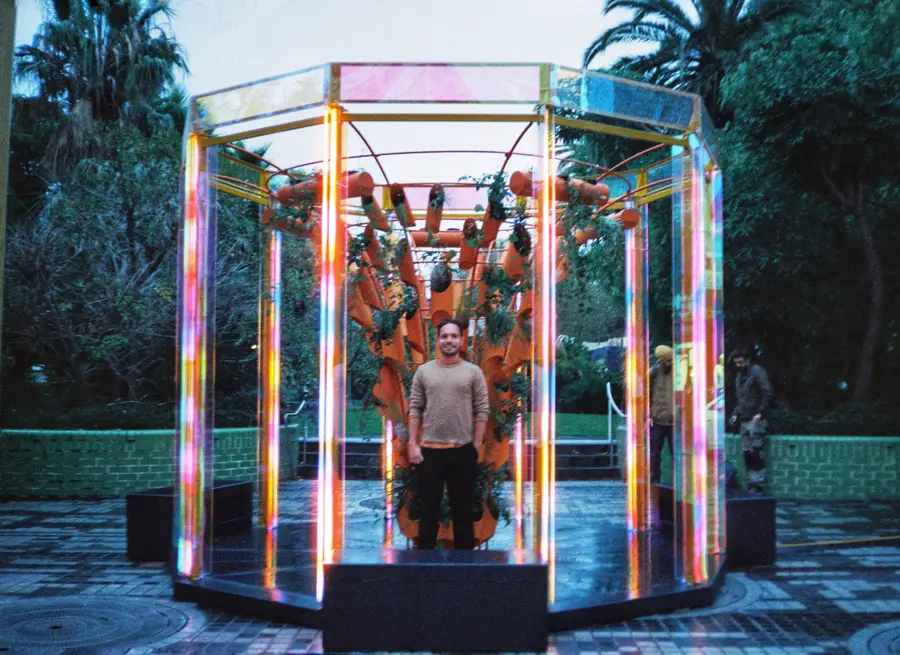
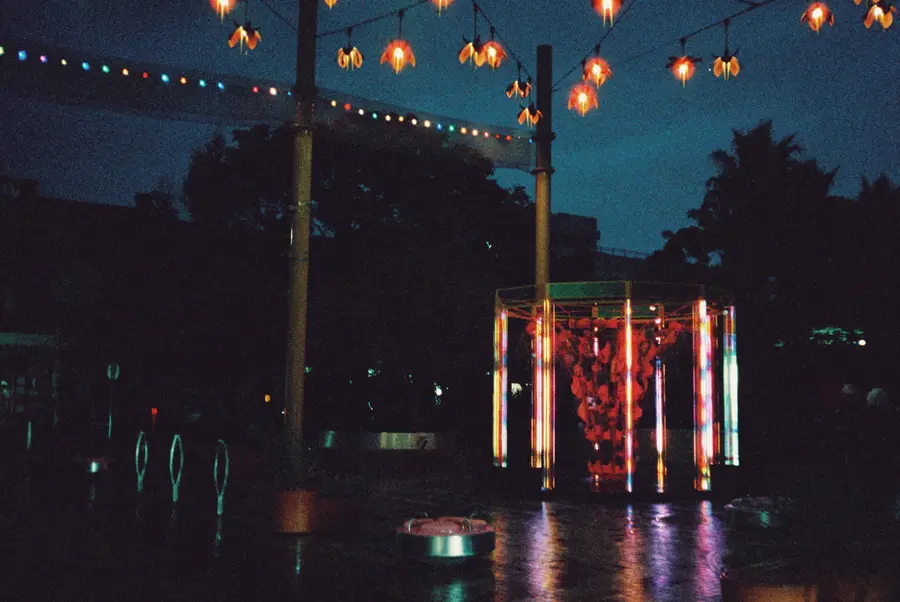
As the sun goes down the sculpture wakes up. Sensors read the plants and the city around them, and the columns answer in colour and sound.
Edition 02
Grattan
Gardens
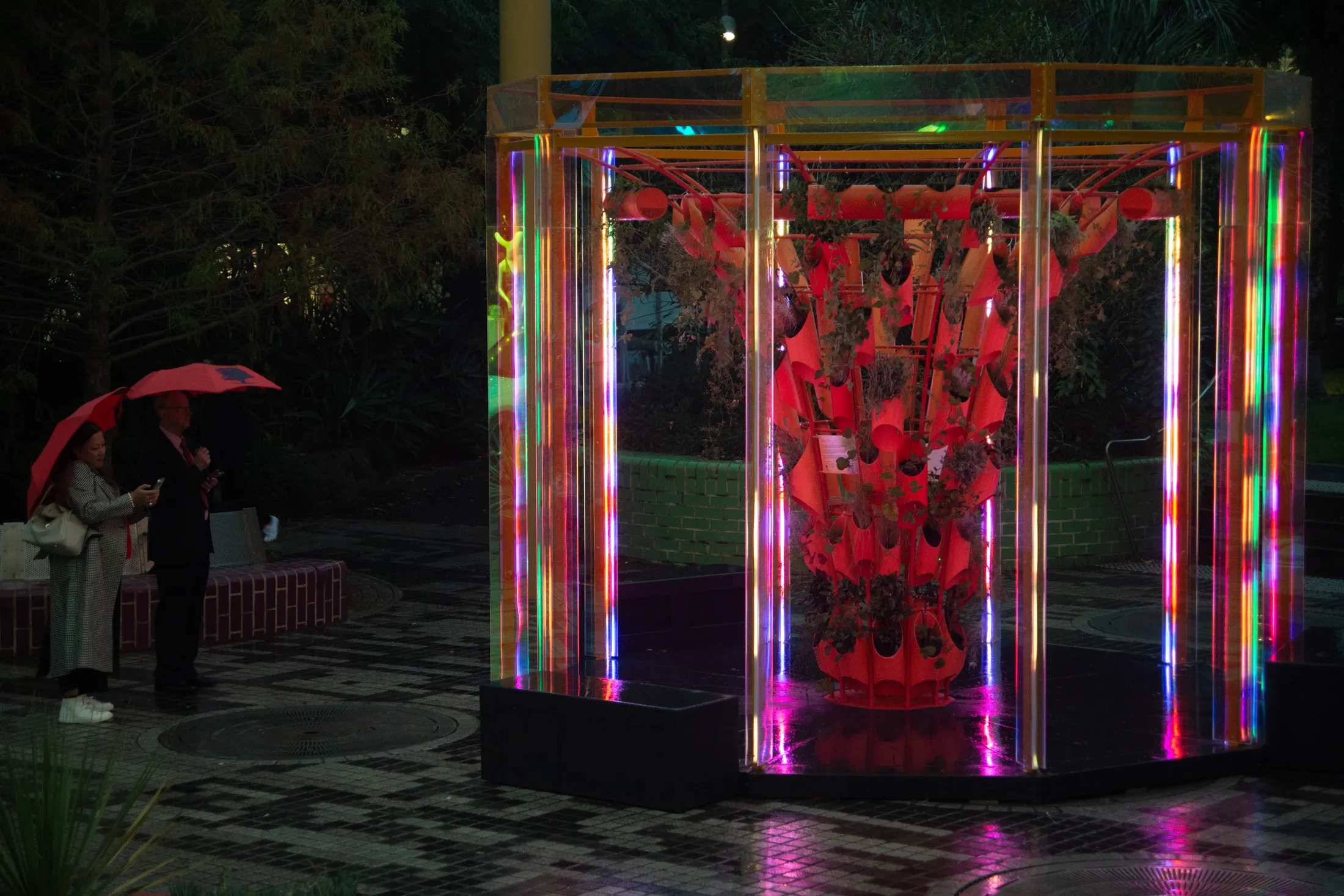
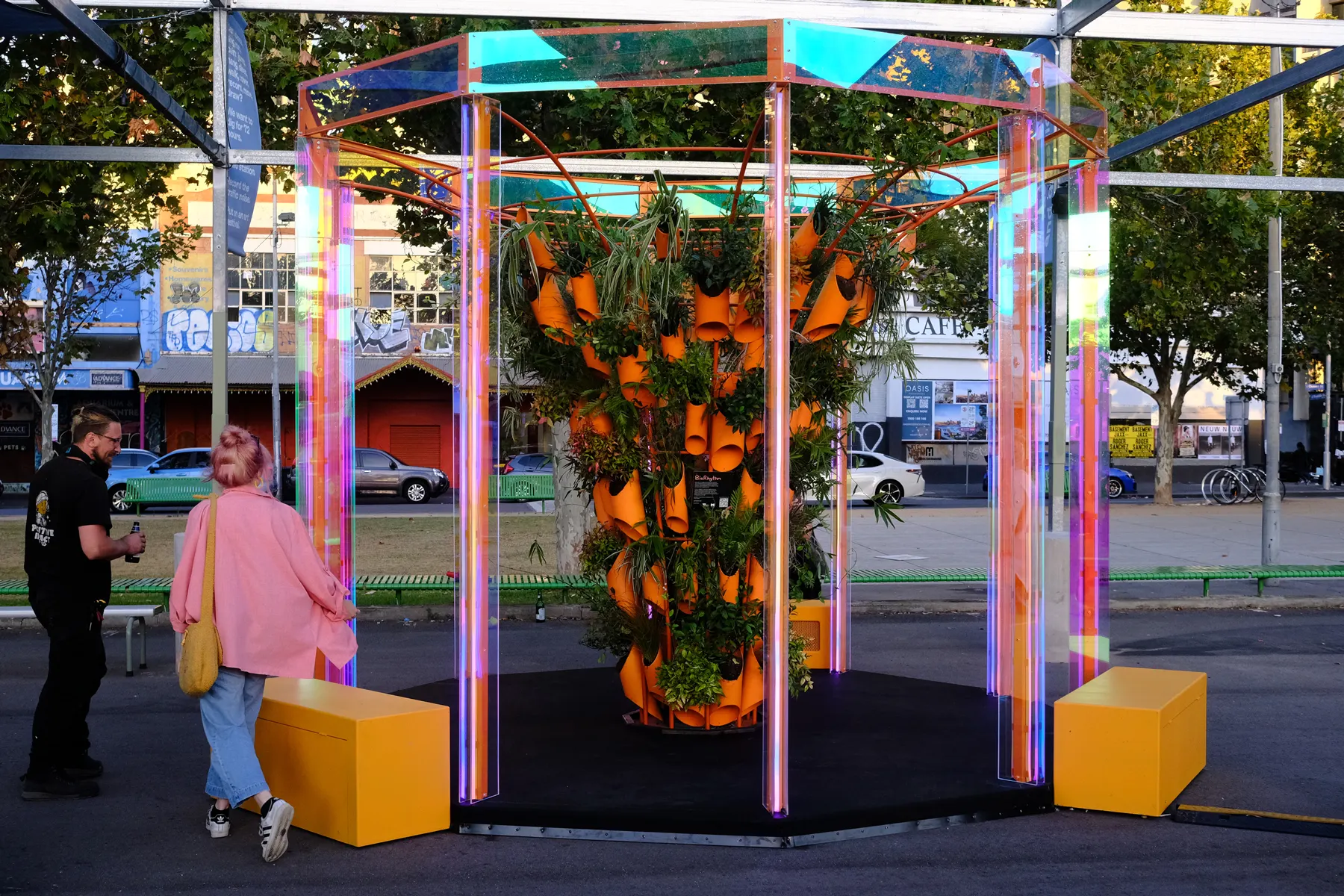
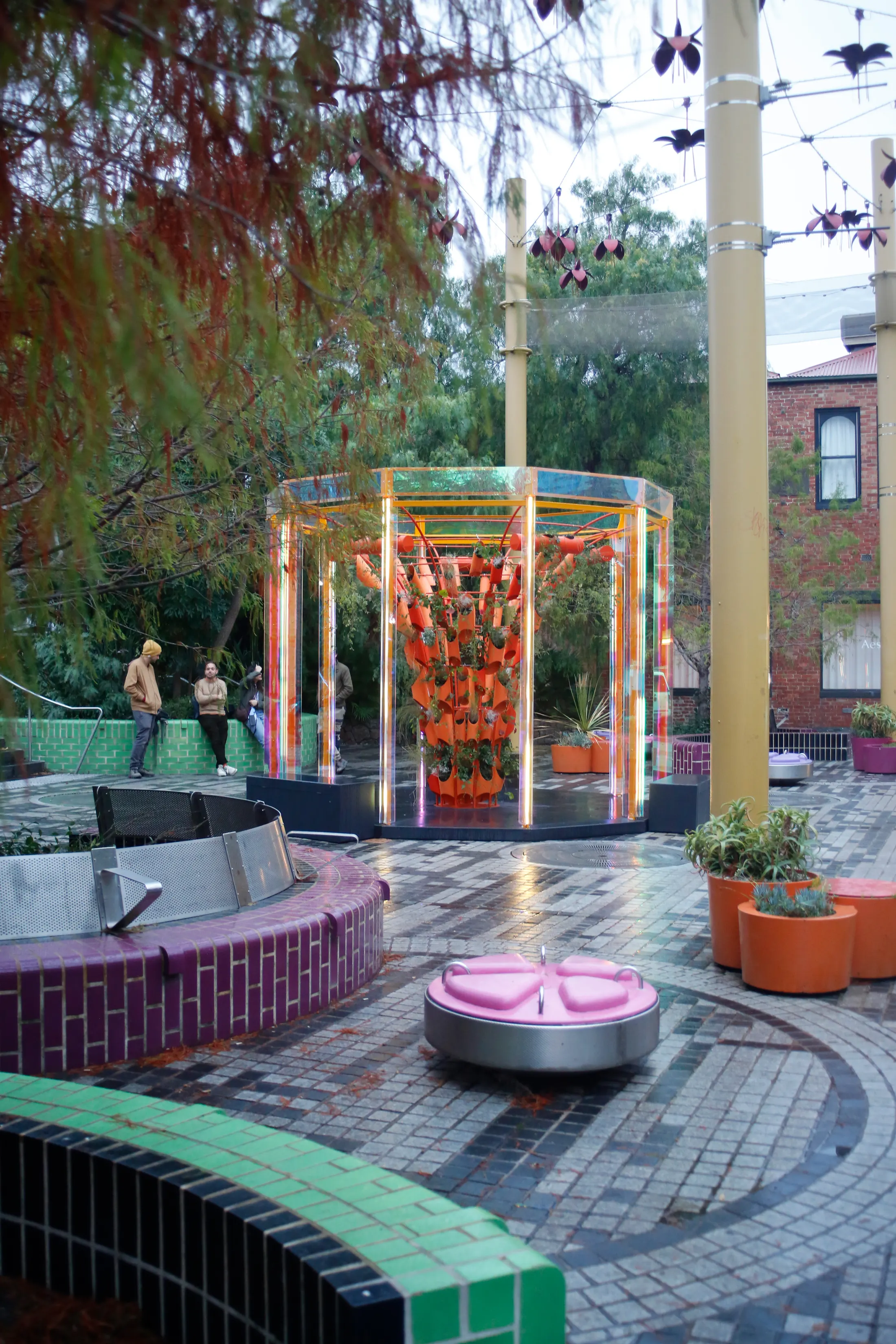
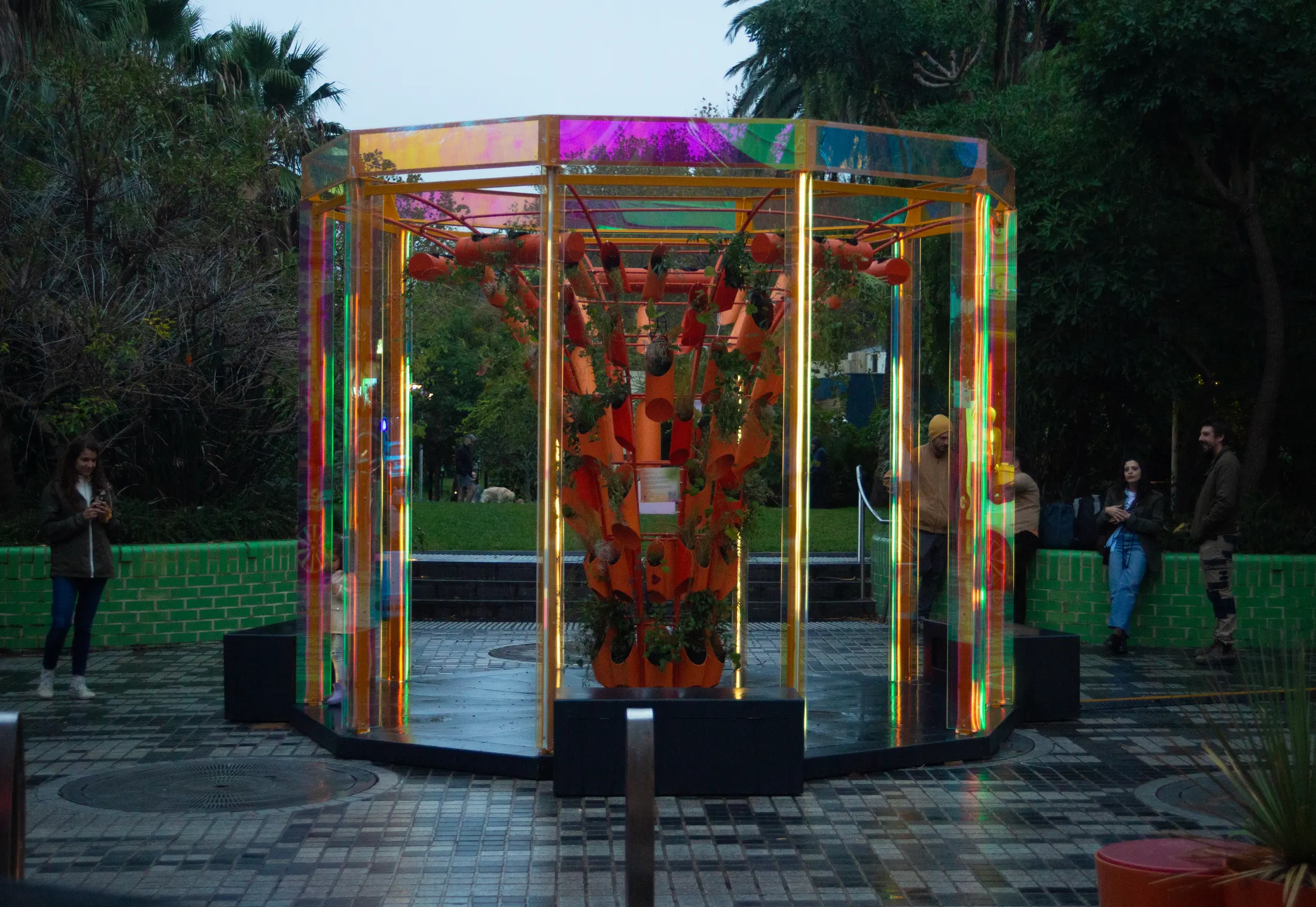
For three months the sculpture transformed the public square at the junction of Greville Street and Grattan Gardens, planted with species endemic to the area.
The second edition was planted with indigenous species selected with the help of Rewilding Stonnington. Each plant carried a QR code linking to information about its habitat, its role in the local ecosystem and, for some, its traditional uses.
The program opened with Lights On on 17 April, followed by a Rewilding Tour on 22 April: a walk that began at BioRhythm and continued on foot around Prahran, looking at Rewilding Stonnington's recent projects and at how communities can foster biodiversity and reconnect with traditional knowledge in their own neighbourhoods.
The square was open to the public, wheelchair accessible, and the installation ran daily from 7am to 10pm.
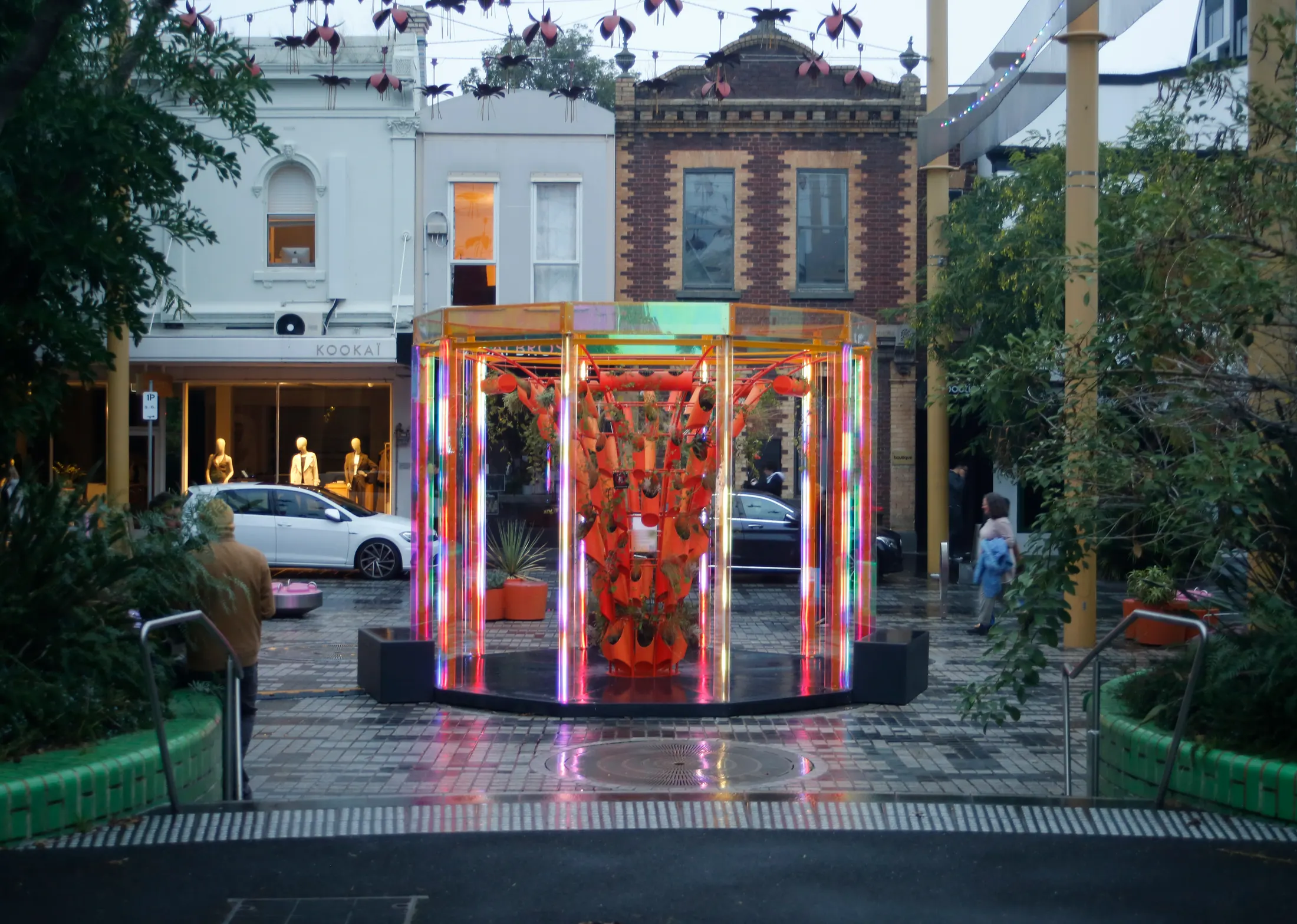
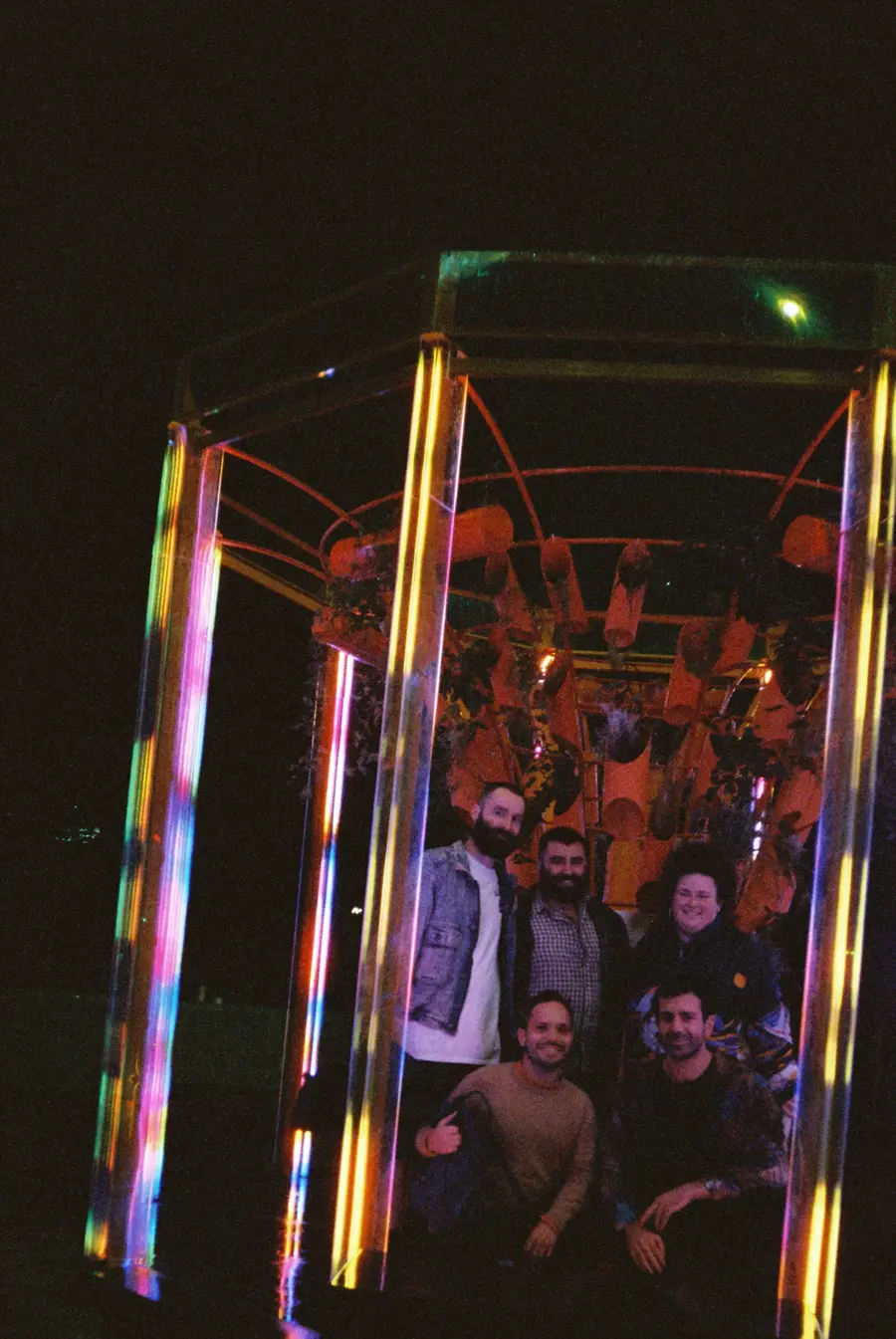
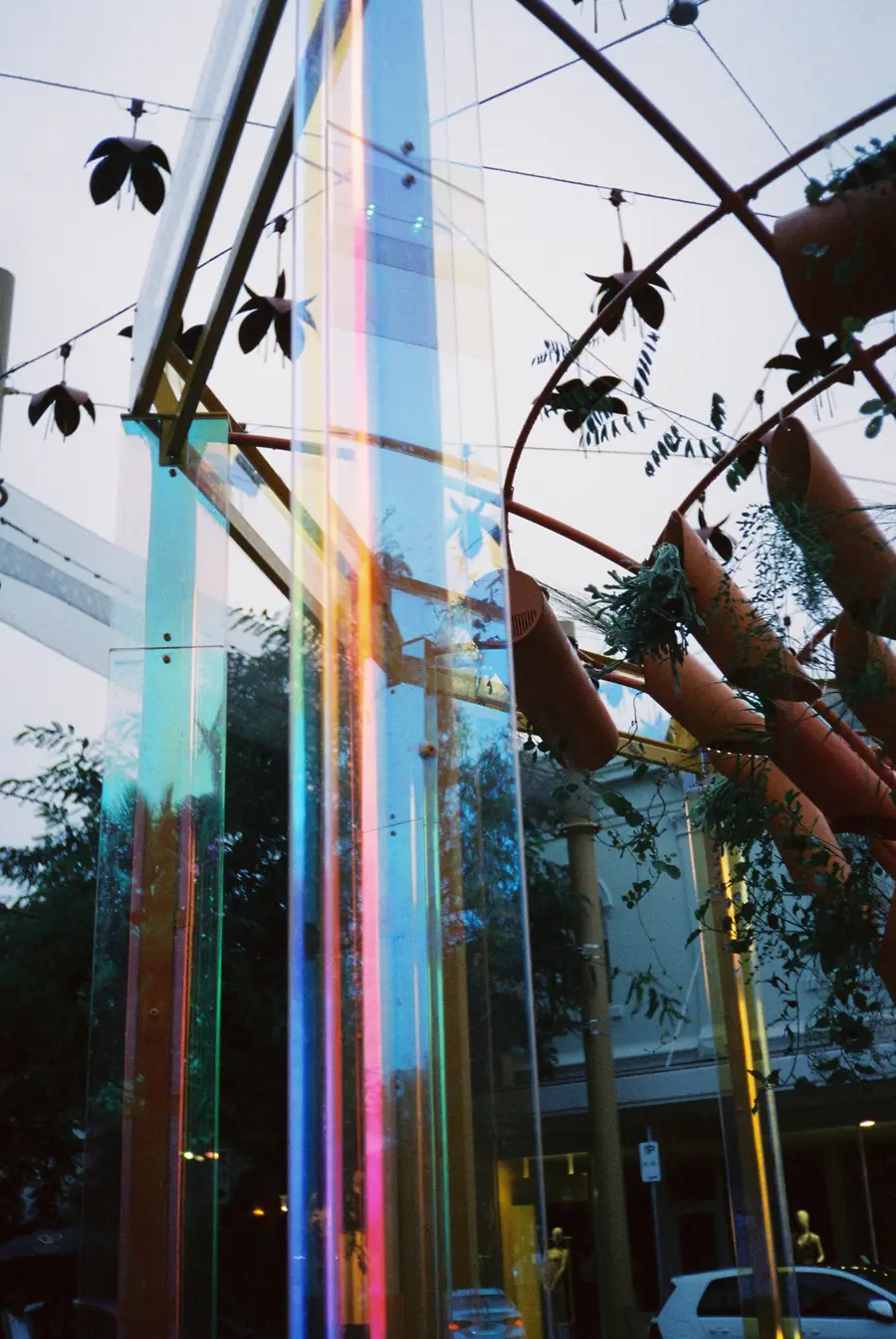
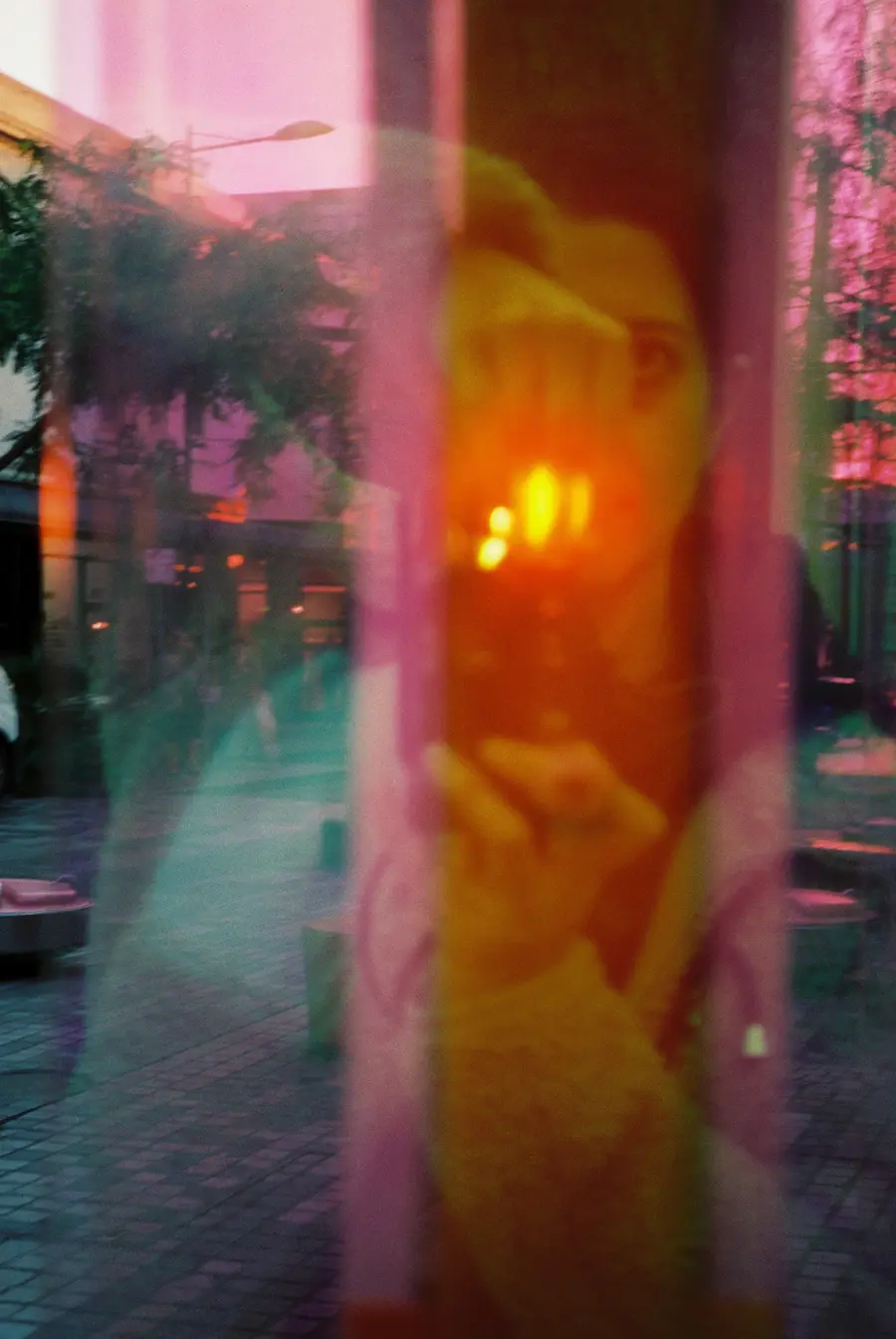
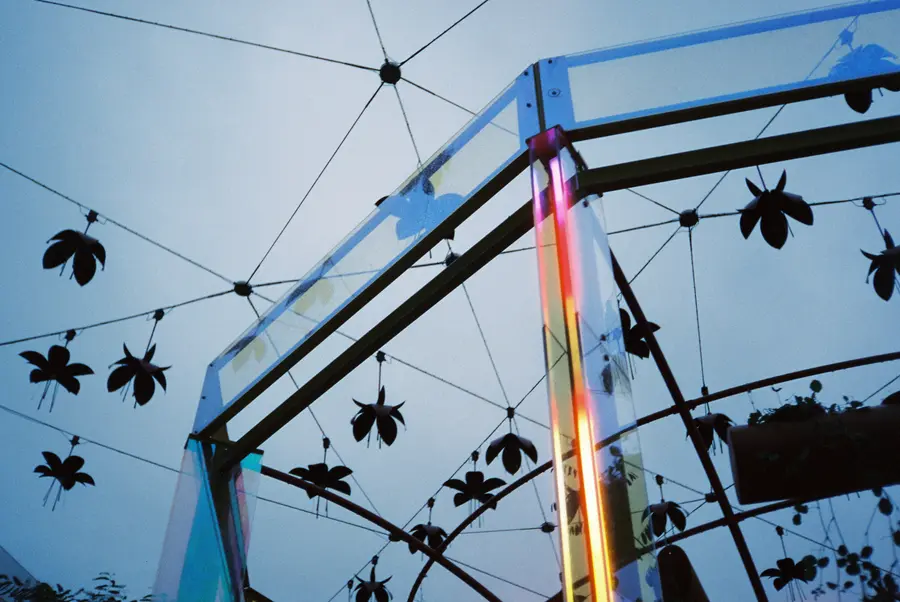
On 35mm
Community partner
Rewilding
Stonnington
Rewilding Stonnington guided the selection of endemic plants for the 2024 edition, sharing their knowledge of the species that belong in this part of Prahran and the role each one plays in the local ecosystem. Alison Richards talks about their work and the planting behind BioRhythm.
Endemic plants used in BioRhythm
The
Plants
The 2024 edition was planted with species indigenous to the area. Open each one to read about it.
Creeping Monkey FlowerMimulus repens
A herbaceous creeping perennial. This low-growing plant forms dense mats of creeping stems that root at the nodes, allowing it to spread and form colonies. It flowers mainly in spring and autumn, and its mauve flowers can resemble a monkey's face. The flowers attract pollinators such as bees and butterflies. Grows predominantly on the margins of lakes, swamps, rivers and grassy wetlands.
Lemon BeautyCalocephalus citreus
A small perennial herb of slender branches, typically found in coastal habitats including sand dunes, heathlands and rocky outcrops. It thrives in well-drained soils and is adapted to harsh coastal conditions, including salt spray and strong winds. It is known for its striking silver-grey foliage, densely packed into a compact, rounded shape, with small, narrow, woolly leaves. Inconspicuous yellow flowers may appear in summer.
Cut Leaf DaisyBrachyscome multifida
A perennial herb found in the grassy understoreys of woodlands and open forests, and a member of the Asteraceae family. It grows best in full sun but tolerates part shade, and grows on a range of soils from heavy clays to light sandy loams. Features pale purple daisy flowers.
Small-leaved ClematisClematis microphylla
A woody climbing shrub or trailer ascending to 3–5 m, often scrambling over other vegetation or rocky outcrops. Leaves divide repeatedly into three leaflets. Male and female flowers grow on different plants; the flowers have four oblong, creamy-white, petal-like sepals but no true petals, and are star-shaped and fragrant. Its fruits are feathery and persistent, and small birds like to nest in them. Its roots can be eaten when toasted and were made into dough by Traditional Owners. Left to grow it will cover neighbouring plants without damaging its host, and a single plant can live for several decades.
Creeping BoobiallaMyoporum parvifolium
A low-growing shrub with small, glossy green, slightly succulent leaves. In spring and summer it produces small, white, star-shaped, fragrant flowers that attract bees and butterflies. Its creeping habit forms a dense mat that spreads horizontally, and it can be trained to cascade over walls. Tolerant of salt and wind, it is often used to stabilise soil on slopes, suppress weeds and control erosion.
Running PostmanKennedia prostrata
A common ground cover that forms a dense trailing or matting shrub. Its leaves are divided into three crinkly, roundish blue-green leaflets with notched tips. Over spring it produces striking red pea flowers on long stalks, which turn into brown pods over summer containing glossy black seeds. Running Postman is food for caterpillars and nectar for butterflies.
Velvet TussockPoa morrisii
A tufted or shortly rhizomatous perennial forming a dense bluish-grey tussock of flat, velvety leaves. From October to December it carries an open, pyramidal flowerhead that is green or purplish. It often forms mounds, grows well under trees, and suits difficult dry, shady spots.
Vanilla LilyArthropodium milleflorum
A perennial herb with long, slender leaves rising from a central base and delicate pale flowers with a sweet, vanilla-like fragrance, borne in clusters on long stems in late spring and early summer. The flowers attract bees and butterflies. Once established, its fleshy tubers are edible and can be cooked much like potatoes.
Wonga Wonga VinePandorea pandorana
A flowering, evergreen woody vine in the Bignoniaceae family that climbs by tendrils and can grow several metres long. Its trumpet-shaped flowers are white to pale pink and sweetly fragrant, appearing in clusters in the warmer months and attracting bees and butterflies. The dense foliage of an established vine provides habitat for small birds and other wildlife.
Wallaby GrassRytidosperma racemosum
Found in grasslands, woodlands, open forests and coastal areas, on soils from sand to clay. This perennial grass grows in tufts with slender, wiry stems up to a metre tall and fine, narrow leaves. In spring and early summer it produces delicate flower spikes in open clusters. It provides food and habitat for insects, birds and small mammals: the tufts offer shelter and nesting sites and the seeds are an important food source. Wallaby Grass can also be used for weaving.
Blue Tussock GrassPoa sieberiana
A low-growing perennial tussock grass of grasslands, woodlands, open forests and alpine areas, preferring well-drained sandy or loamy soils. It grows in dense clumps with slender upright stems up to a metre tall and narrow, bluish- to grey-green leaves. In spring and summer it produces delicate flower spikes in loose clusters. The tussocks offer shelter and nesting sites, and the seeds are an important food source for many species.
Australian IndigoIndigofera australis
A leguminous shrub whose genus name is Neo-Latin for "bearing indigo" — the purple dye originally obtained from some Indigofera species. Found in forests, woodlands, heathlands and coastal areas, it has delicate pinnate leaves that give it a fern-like appearance, and small pea-like flowers, usually pink or purple, in elongated clusters. The plant can be used as a dye for colouring fabric.
Cushion BushLeucophyta brownii
A bushy shrub with silvery-white foliage, found in coastal heathlands, sand dunes and limestone cliffs. Well adapted to salt spray and strong winds, it has a distinctive rounded form and small, cylindrical, silvery-grey leaves covered in fine hairs that reduce moisture loss and protect against salt. The dense foliage provides shelter and nesting sites for small birds and other wildlife.
Ruby SaltbushEnchylaena tomentosa
A low-growing, semi-woody sub-shrub of the arid and semi-arid regions of Australia, including coastal dunes, inland plains and rocky outcrops. Its striking red berries contrast with small, oval, silver-grey leaves covered in fine hairs. Small greenish-yellow flowers appear in spring to early summer, followed by the berries, which can be eaten and used as a dye. The berries are an important food source for native birds such as finches and honeyeaters.
Prostrate GoodeniaGoodenia ovata (prostrate form)
A low ground cover — the prostrate form of Hop Goodenia. It has green, ovate leaves with toothed margins and produces yellow flowers from late spring. Wind- and salt-tolerant, it is very useful as ground cover in coastal gardens.
Happy WandererHardenbergia violacea
Also called Purple Coral Pea, a vigorous twining vine in the pea family, Fabaceae, typically reaching 2–3 m. Its compound leaves have three leaflets, and clusters of pea-shaped flowers, usually purple or violet, bloom from late winter to early spring. It can be grown as a ground cover, climber or trailing plant.
Common EverlastingChrysocephalum apiculatum
Also known as Yellow Buttons. A low-growing perennial herb, typically 15–30 cm tall, with narrow, woolly, grey-green leaves. Small yellow button-like flower heads bloom from spring through summer and sometimes into autumn, attracting bees and butterflies. Often used as a ground cover, border plant or in rock gardens.
For councils, light festivals & developers
Commission
BioRhythm
A living light sculpture that is re-made for every place it visits: new plants, new sound, new story.
BioRhythm is a site-specific work designed to travel. Each presentation is adapted to its location, planted with species endemic to the site and paired with a new sound score composed for it, so the sculpture tells the story of where it stands.
- Suits
- Light festivals, council public art and activation programs, precincts and developments
- Adapted
- Local endemic planting palette and a new sound score for each site
- Install
- Approx. 1.5 days to install, 1 day to pack down
- Duration
- Seasonal installations, with scope to develop into a long-term or permanent work
Questions
FAQ
What is BioRhythm?
BioRhythm is a biophilic, interactive public light and sound sculpture by Buko Studio and Public Street, led by Chris Nichols, Amir Mahdavian and Rachel Iampolski. A funnel-shaped structure holding more than 80 living plants is surrounded by ten LED light columns, and the light and sound respond in real time to data read from the plants and their environment.
How do the plants control the light and sound?
Around 20 plants are connected to sensors that track moisture changes in their soil. Further sensors read carbon dioxide given off by the plants, plus temperature and light levels around the sculpture. Software built in TouchDesigner, running with Arduino and Raspberry Pi hardware, translates those readings into the colour and movement of the light and into layers of an evolving sound score.
Is BioRhythm interactive?
Yes, gently. BioRhythm responds to its living plants and to the conditions of the space around it, so it is always changing. The changes are deliberately slow and subtle, like plant life itself. Its cocoon-like form invites people to step inside, sit and stay; visitors often spent up to an hour within it.
What plants are used?
Plants are chosen for each site. The 2024 edition at Grattan Gardens, Prahran used species endemic to the area, selected with Rewilding Stonnington, including Running Postman, Wallaby Grass, Vanilla Lily, Wonga Wonga Vine, Ruby Saltbush and Common Everlasting.
Where has BioRhythm been shown?
At Testing Grounds, Southbank, from 17 March to 15 April 2023, supported by the City of Melbourne; and at Greville Street and Grattan Gardens, Prahran, from 17 April to 15 July 2024, supported by the City of Stonnington with community partner Rewilding Stonnington.
Can BioRhythm be commissioned, toured or made permanent?
Yes. BioRhythm is a site-specific work designed to be re-adapted for new locations, with a planting palette of local endemic species and a new sound score created for each site. It suits light festivals, council public art and activation programs, and precincts or developments, and can be developed towards a long-term or permanent work. Contact [email protected].
How long does BioRhythm take to install?
Approximately one and a half days to install and one day to pack down.
Credits
- Project leads
- Chris Nichols
Amir Mahdavian
Rachel Iampolski - Production
- Buko Studio
Public Street - Concept design
- Buko Studio
Gui Giantini
Jeff Chicharelli - Sound design
- Myllo (Tim McDonald)
Berkay Mete - Fabrication
- Substraight
Positive Impact Projects - Programming
- John Carolan (2023)
Auravis (2024) - Supported by
- City of Melbourne (2023)
City of Stonnington (2024) - Community partner
- Rewilding Stonnington